

Reimagining Cres.co Retreats With User Voices
User research and service redesign for Cres.co’s retreats, focusing on clearer communication, experience improvement, and user-centered transformation
My role
UX & Service Designer
Timeline
6 weeks
(2026)
Skills
User Interviewing & Qualitative Research, Journey Mapping, Personas, Blueprinting & Service Mapping
#UXResearch
#Servicedesign
OVERVIEW
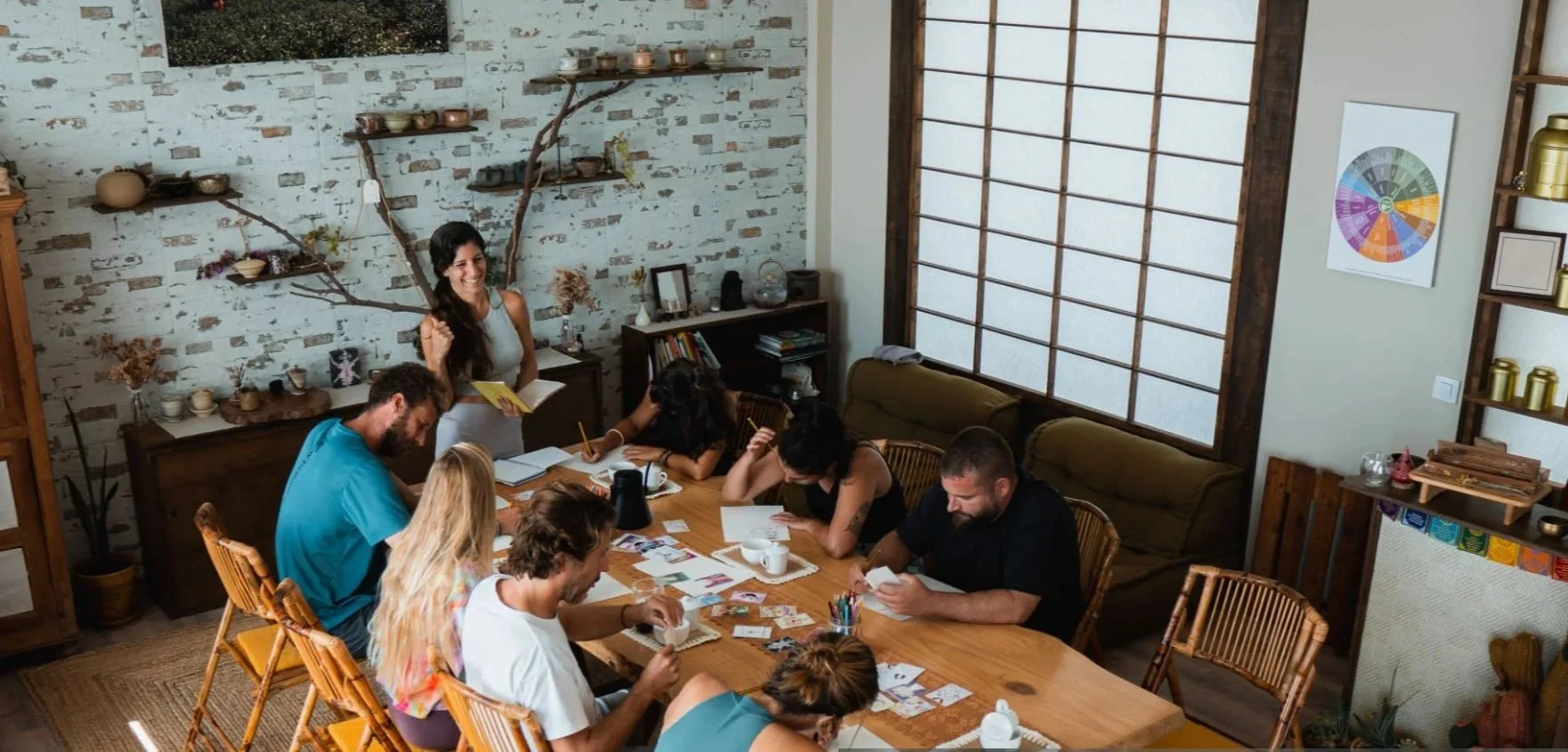
Cres.co guides individuals and organizations through meaningful transitions. Their “Re:Treat” is a multi-day experience in the Dolomites, blending workshops and outdoor activities to help participants find clarity, confidence, and direction for their next steps in their personal and professional lives.


THE CHALLENGE
Cres.co needed to better understand both their current and potential retreat participants so they could make informed decisions about how to design an experience that is truly meaningful and supportive.
The aim was to create a retreat that not only resonates with people during their time in nature but also inspires real, lasting change in their everyday lives.
Two main research keypoints:
Cres.co lacked clarity on who participated and why, specifically missing qualitative insights into participant motivations and transformation needs.
“Who really are our users? Why are they looking for a change and how can the retreat support them?”
Without understanding what "transformation" meant to different people, Cres.co couldn't design experiences that truly served them or differentiate in a crowded wellness market.
“What does transformation means to them? What kind of clarity are they looking for?”
THE OUTCOME
From retreat to “laboratorio“ (workshop): the retreat has been redefined and communicated as an active, hands-on experience for personal growth in nature.
The messaging is simpler, the experience is now offered in a shorter format with flexible payment options, and Cresco is easier to find online. Together, these changes remove barriers and make it easier for people to discover and say yes."
Primary Implementation
Secondary Implementation
Key areas of improvement focused on:
Communication & Positioning
Shift from “retreat” to “laboratorio” (workshop/lab) to better reflect the hands-on, transformative nature of the experience.
Simplified language to make the offer more accessible and clear for new users.
Customer Journey & Touchpoints
Short the experience (from 4 days to 2)
Offer an all-inclusive package
Possibility to pay in installments
Add strong calls-to-action,
Redesign the booking process to keep users on the Cres.co platform
Offer a “retreat kit” to support participants during and after the experience
Online Presence:
Improve SEO
Increase visibility on search engines
Promote the retreat on specialized platforms to reach the right audience.
This approach ensures the most pressing users’ needs are met first, prioritizing actions that are quicker and easier to implement. This gives Cres.co immediate improvements before the incoming event, while also providing a roadmap for ongoing enhancement and lasting value for both users and the organization.
The retreat is now shaped around the real goals of each participant, making sure everyone gets the experience they are truly looking for. A clearer understanding of different groups has also made it easier to communicate in a way that feels personal and relevant.
Looking ahead, these tools will help the retreat grow intentionally, stay focused on what people actually need, and create lasting, genuine value for everyone involved.
RESEARCH AND METHODOLOGY
The research combined qualitative and quantitative methods to build a comprehensive understanding of the different types of users and potential users.
01 Desk Research & Competitive Analysis
Mapped direct and indirect competitors. Analyzed how similar retreat experiences are positioned, priced, and communicated. Conducted market research: trend analysis on tourism, wellness, retreat.
02 Survey Design & Distribution
Developed a targeted survey reaching both current participants and people interested in personal transformation-focused retreats in nature.
03 Qualitative Interviews & Empathy Mapping
Conducted in-depth conversations to better understand them. Interview findings were translated into empathy maps to capture emotional and psychological dimensions.

3 weeks
Personas
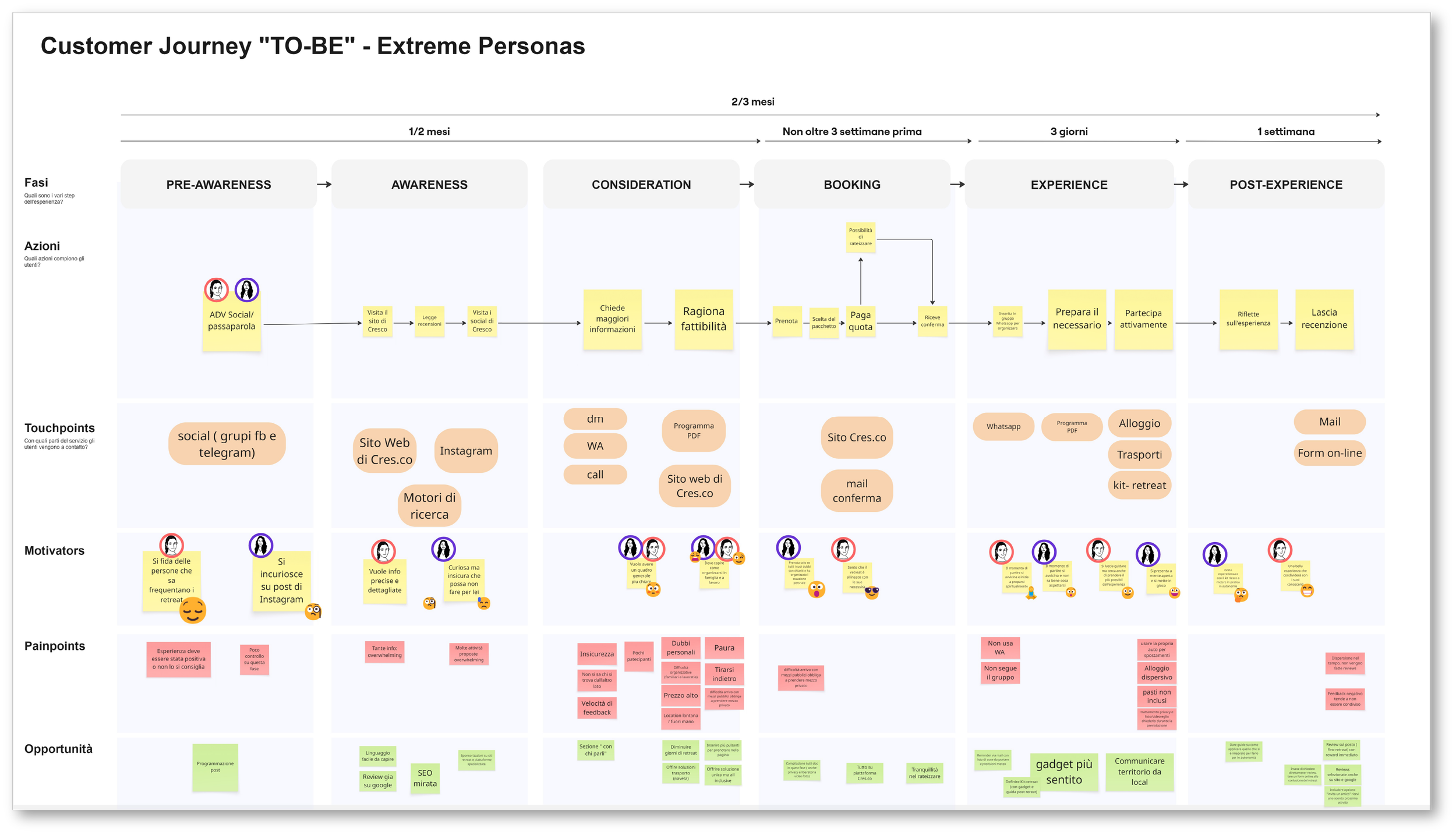
04 Data Synthesis, Extreme Personas & Journey Mapping
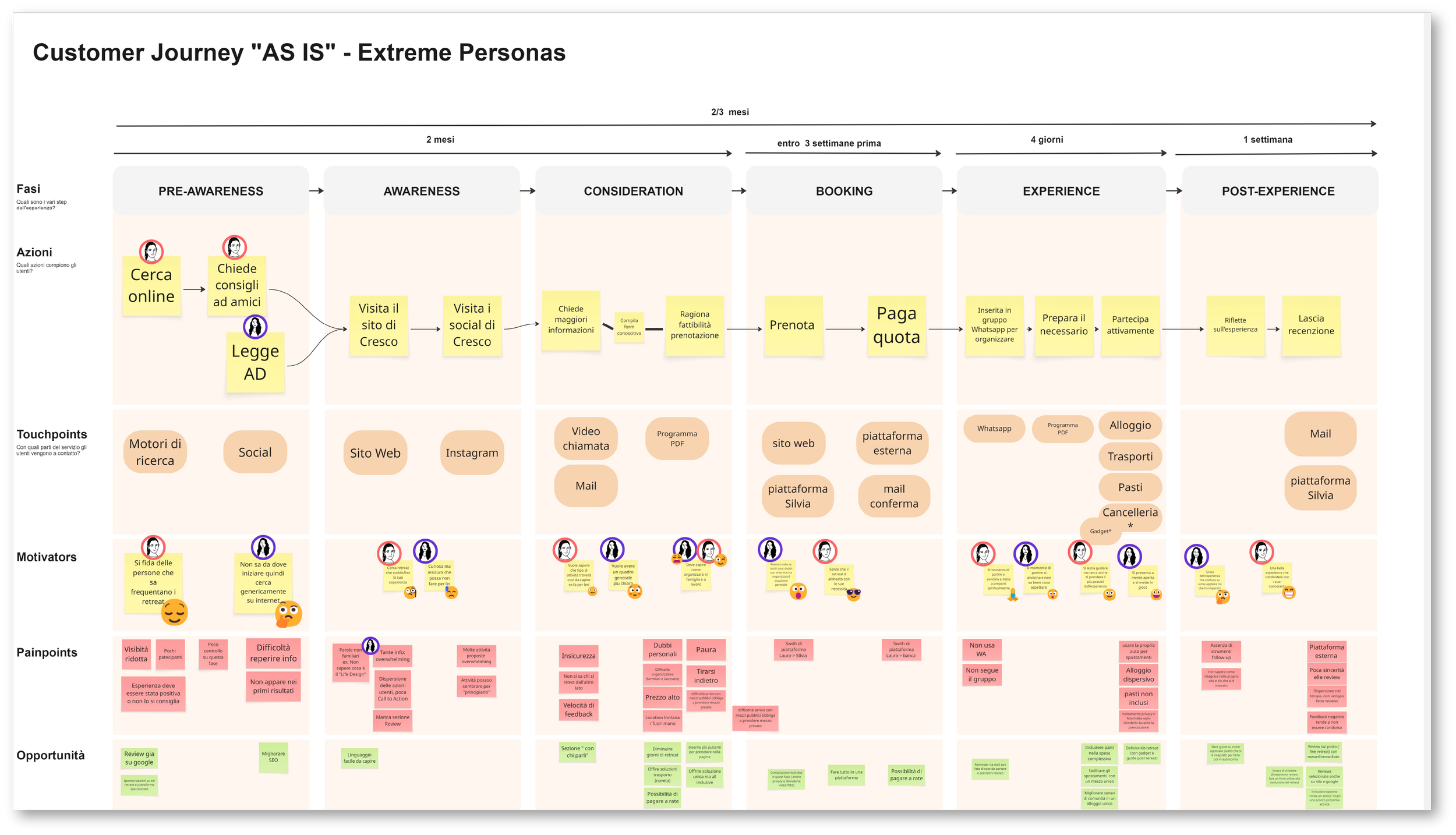
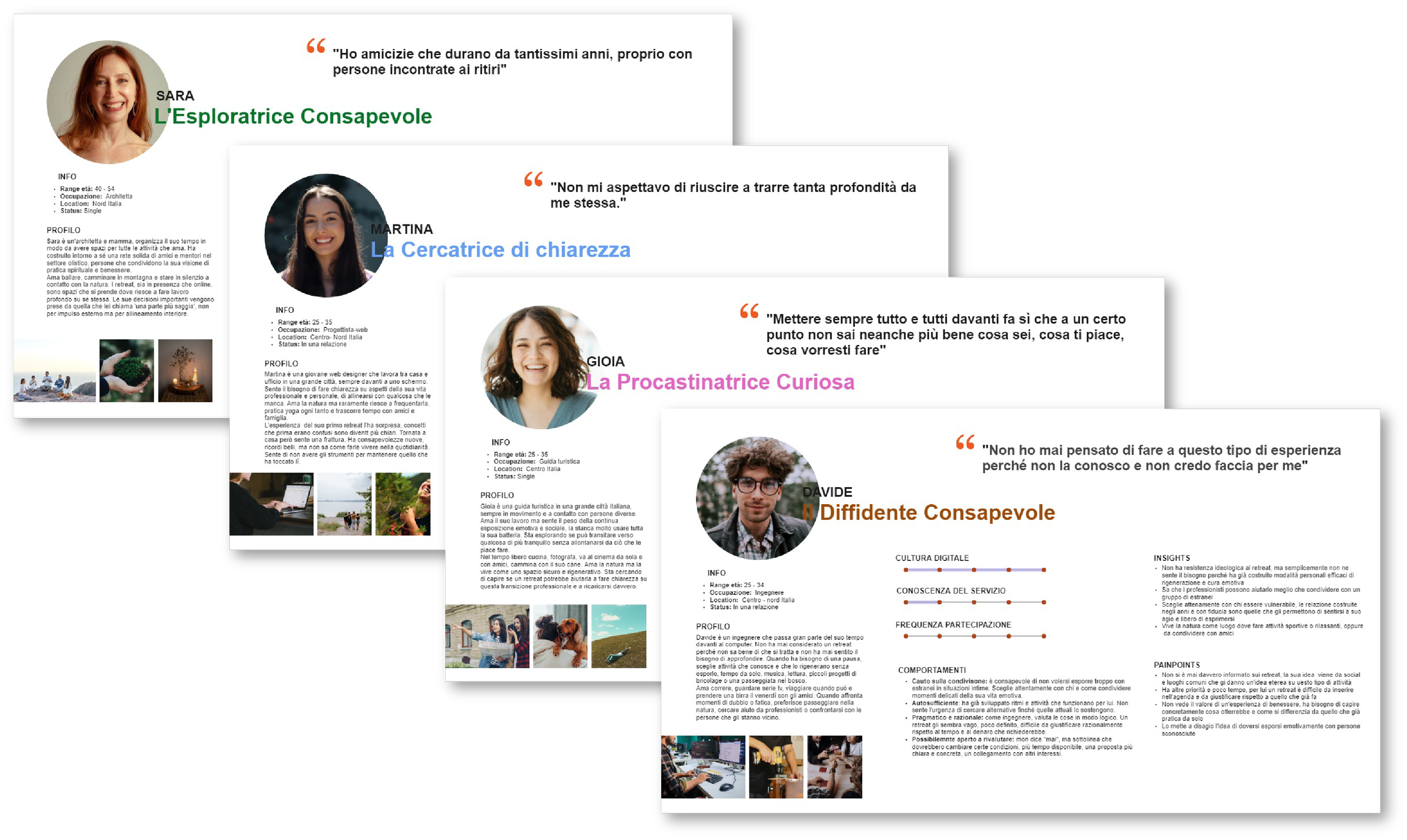
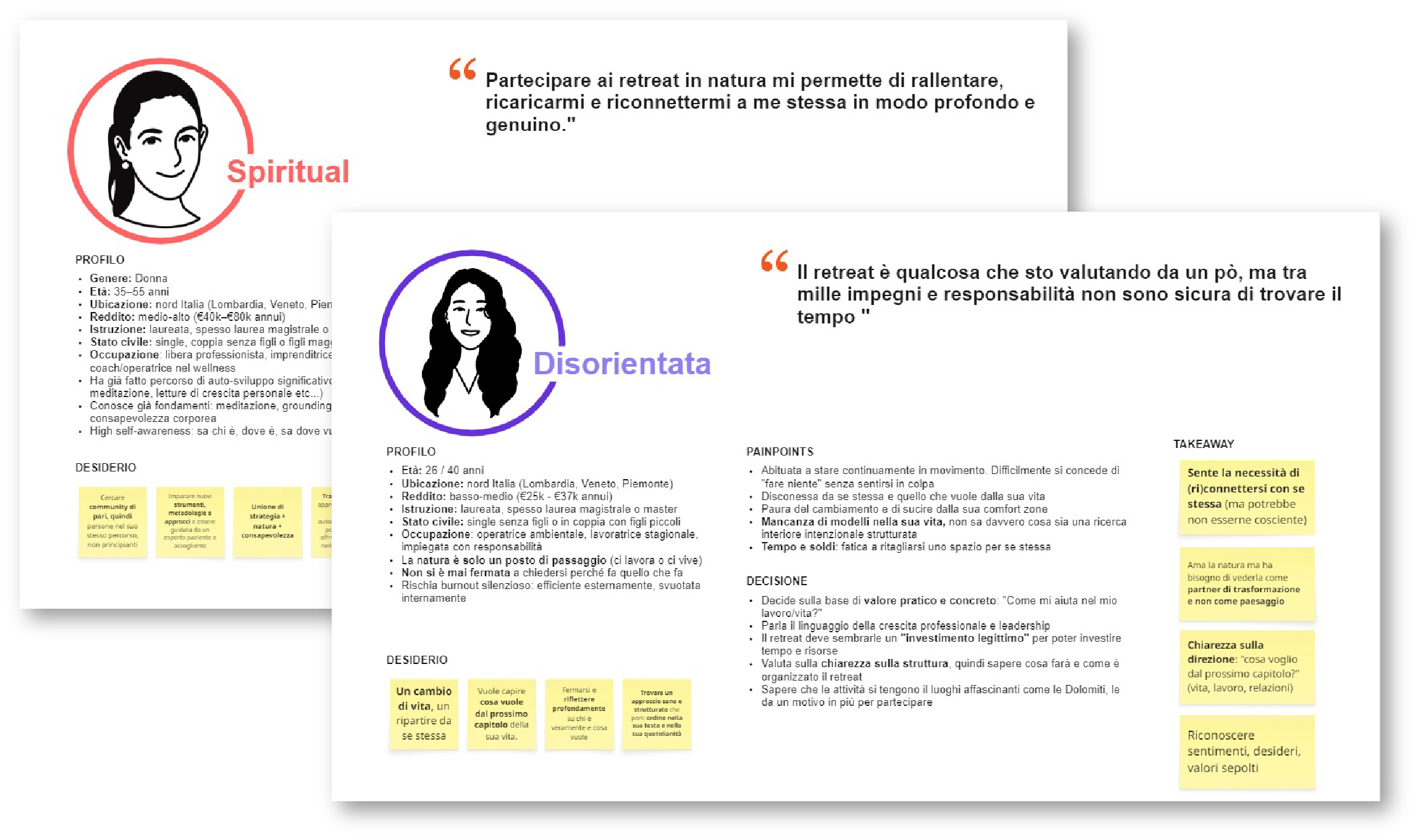
Synthesized research into personas & extreme personas representing key audience, then mapped the journey from initial interest through post-retreat reflection to identify key needs, barriers, and opportunities.

2 weeks
05 Co-design & Insight
Conducted collaborative co-design session to explore and prioritize opportunities. The results were translated into actionable recommendations for the experience, communication and positioning.
1 week
This approach was designed to capture both the big picture and the details. Starting with market research and surveys gave a sense of overall trends and common needs, while in-depth interviews and empathy mapping revealed the personal stories and motivations behind those numbers. By building personas and mapping out their journeys, it became possible to spot real painpoints and opportunities, ensuring that every solution was grounded in what people actually experience, not just assumptions.
Extreme personas

Weekly Planning on Notion
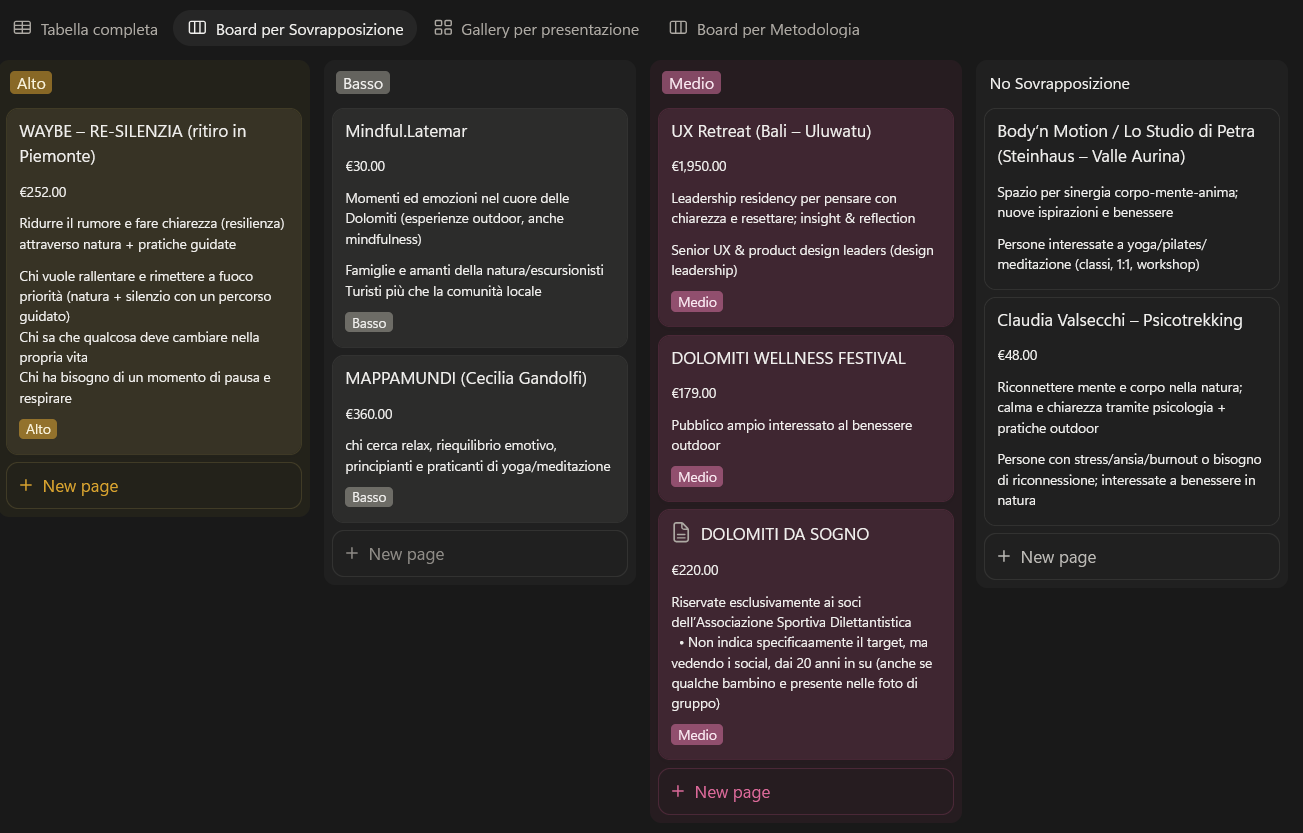
Competitor Analysis
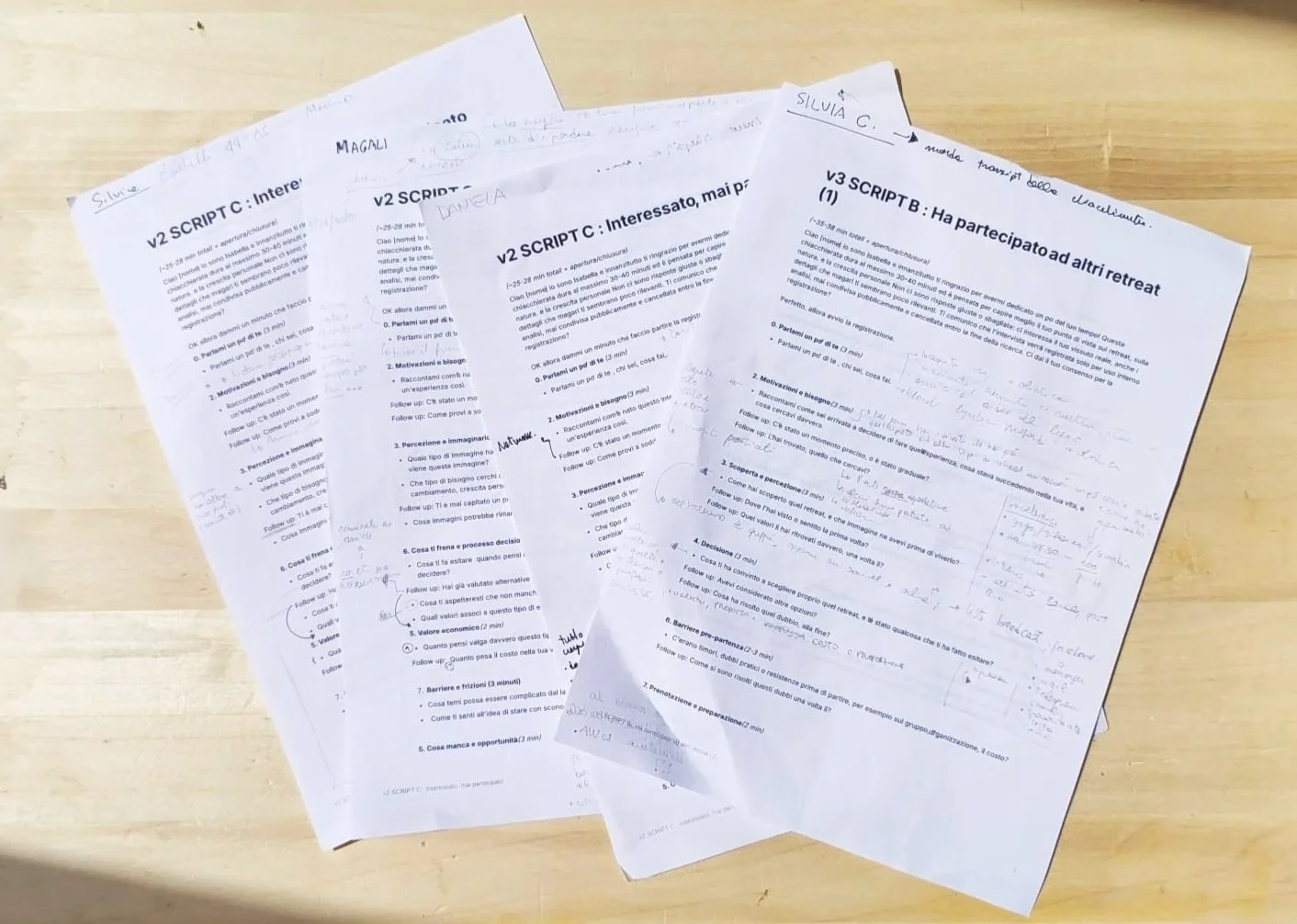
Interview sheets
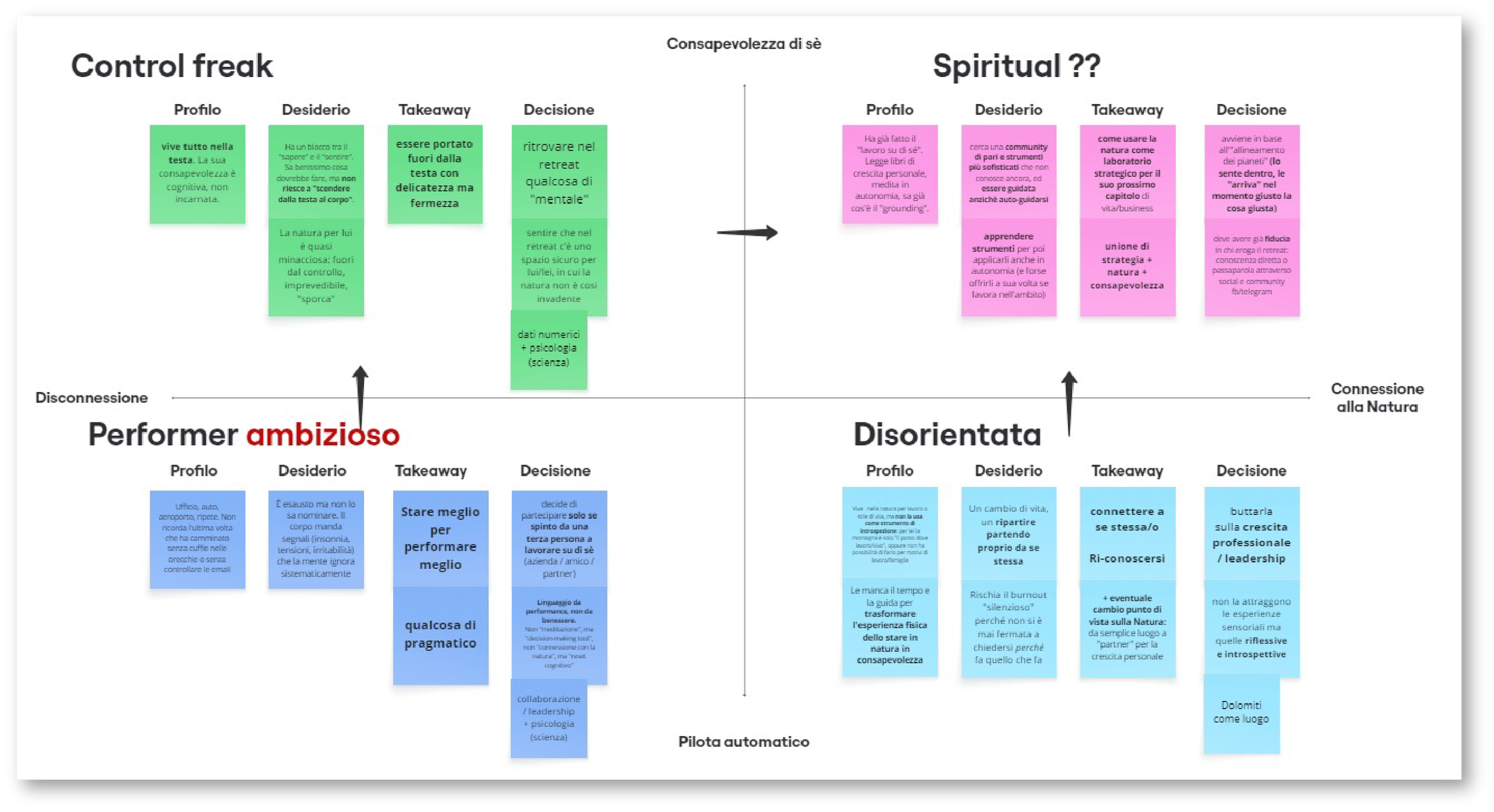
Extreme Personas Matrix
MY ROLE
As a UX and service designer collaborating with Cres.co , I was responsible for:
Planning, conducting, and analyzing the research (online survey and in-depth interviews)
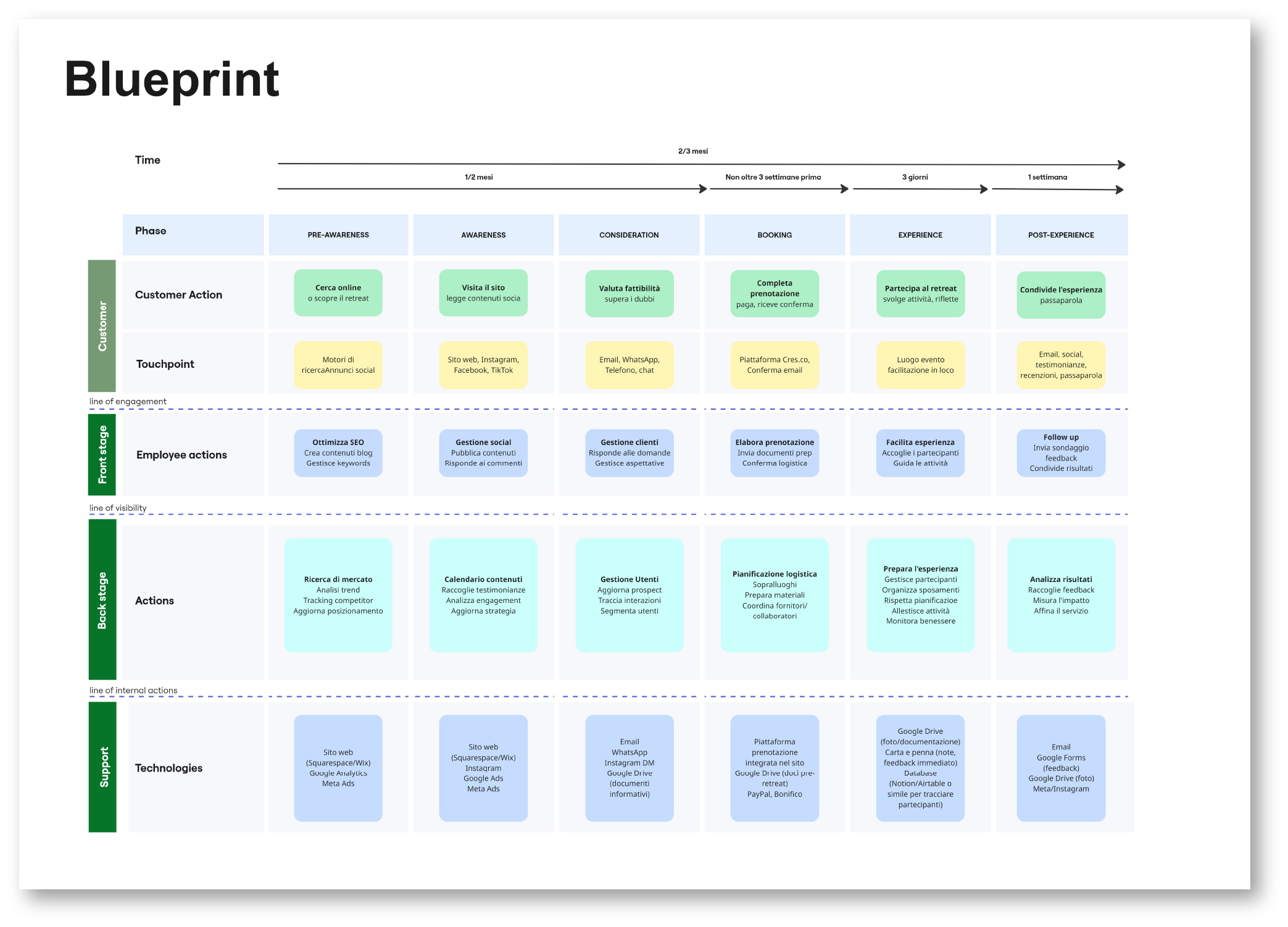
Synthesizing data into empathy maps, personas, and customer journey maps
Identifying pain points and opportunities from the research